
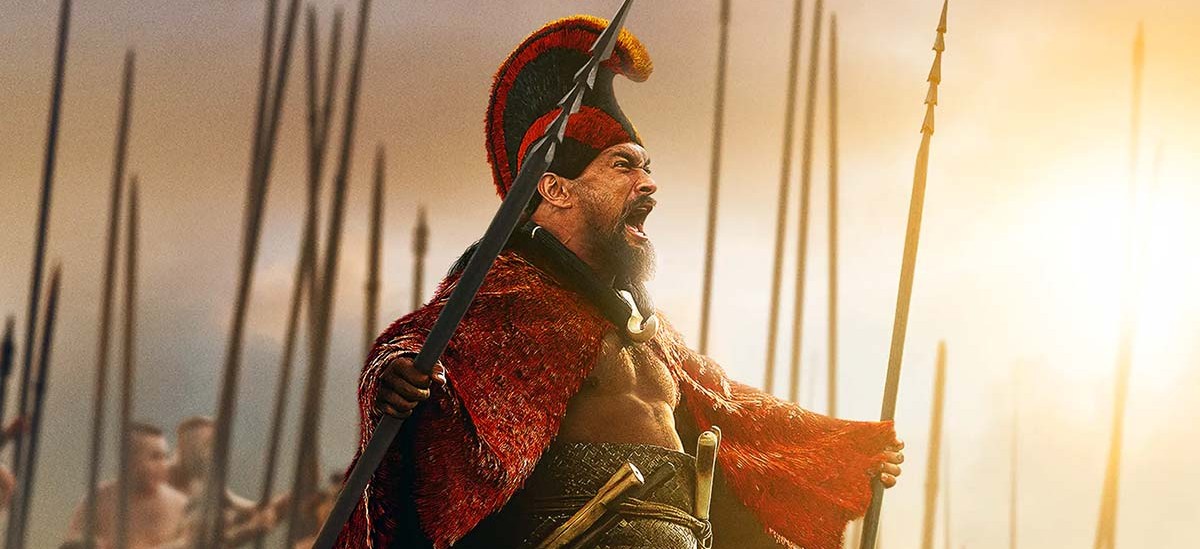
Chief of War: An Accomplishment for Pacific Islanders
I love to watch historical TV shows, especially those that are a bit gritty and not stereotypical period dramas1. Vikings is one such examples that comes to mind. This year a new show in the same spirit was released, but focusing on a completely different culture from the other side of the world: Chief of War, a TV show about late 18th century Hawai’i.
So Chief of War, with Jason Momoa in the lead role? Sounds cool! I knew him only from GoT and the first Aquaman, both of which I wasn’t much of a fan, and he didn’t blow me off my feet with acting skills. But when I started watching Chief of War, I was pretty amazed at what’s happening in this show. It’s Hawaiian, and yes, they do actually all speak ʻōlelo Hawaiʻi! The entire first episode and the vast majority of the show is in the Hawaiian language – and I suspect, this is where many people gave up on the show. Looking at the ratings on several websites, I have the suspicion that a lot of people gave this a negative rating because they’re too lazy to read subtitles. Their loss.
This show is an achievement like no other before. I have never seen a TV show that put so much effort into portraying an indigenous culture with this much accuracy and passion, and with such a budget2. Jason Momoa was one of the driving forces behind this project, he spend many years writing and producing this show, and he even actually learned to speak Hawaiian for it. That’s a really impressive accomplishment, and from the few interviews I saw, the entire cast of this show is very proud of their accomplishment. Most of the cast actually had to learn to speak Hawaiian as well, as a lot of them are various Pacific Islanders such as Maori or Samoan, with some renowned actors such as Temuera Morrison and Cliff Curtis.
Admittedly it took me a bit to get into the show, because there is a lot going on, and I struggled to tell apart some of the characters’ relationships. But still, every episode had some interesting detail that kept me watching, whether it was just a scene depicting them creating weapons, or harvesting food. It’s a fascinating look into the past, always accompanied by a bit of dread, because I as a 21st century person am very much aware at the inevitable decline of this way of life.
Chief of War focuses very much on the conflicts between different Hawaiian kingdoms, but always with the looming threat of the paleskins exploiting them. You kinda know it will happen eventually… and when it actually happens, it’s utterly devastating. The Olowalu Massacre is depicted in this show, with a British ship firing at the natives unprovoked and senselessly. But surprisingly, this is not the main focus of the show, it continues to focus on its own internal conflict, leading up to the climatic season finale. That small scene where they showed Kai’ana making a traditional weapon has a huge pay-off here, when we get to see just how brutal and devastating these somewhat harmless looking weapons are used. I’m not so much into battle scenes, usually they make me fall asleep. But this was like nothing I’ve ever seen before. Brutal, devastating and epic. It’s extra dramatic that the entire battle was actually filmed on the lava field of a volcano. And Kilauea, the volcano, erupted for the first time in many years just on the same day as they started filming this battle. One can only believe that the gods were honoring them, or vice versa.
I wonder if there will be a second and third season of this show, because despite its climatic ending, the story still feels unfinished and there are many more battles that these people need to fight. However, I do hope that this show paves a path for other indigenous cultures to produce similarly epic and authentic shows. I’d certainly love to watch more shows that are not anglo- or euro-centric.
Write a response